

Seven Decades Worth of Collage: An Interview with Vitalijus Butyrinas
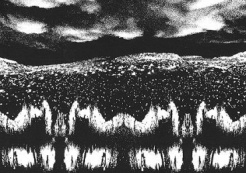
I refused because I love art. — Vitalijus Butyrinas
I'd live a photographer's life once again. — Vitalijus Butyrinas
Among all Lithuanian photographers, Vitalijus Butyrinas is a real champion in terms of the number of awards. Until this day his works have been exhibited in over a thousand of personal and group exhibitions. Butyrinas is widely recognised for the distinct symbolism of his meticulous montages which are still celebrated and admired to this day. Both Aleksandras Macijauskas and Antanas Sutkus admit that they saw this remarkable aesthete of photography as a source of inspiration who taught them and many other colleagues the subtleties of photographic technique. Meanwhile Butyrinas himself thinks that his montages added some spice to the Lithuanian school of humanist photography.
Butyrinas is one of the co-founders of the Lithuanian Photographers Association (LPA) where he managed the organisational relations with other countries.
Due to his complicated health condition, Butyrinas is now unable to move around—for over a decade he has been bound to a bed in the attic of his Vilnius Old Town flat. It is difficult to call his dwelling space a mere “attic”. It is rather an entire museum of photography full of prints, medals, diplomas, cameras, and many other items of his epoch that can keep a visitor busy for hours.
However guests are rare: “My colleagues and friends are really eager to visit me. There is always people queuing up, both with schnapps and without. The problem is, though, that there’s no one to let them in. I find it very difficult to make arrangements with the person who is looking after me. I am unable to walk, so I cannot come down to the ground floor.”
Butyrinas is cheerful and witty, and he is eager to talk about the modern history of Lithuanian photography. He talks about his work in present tense: “I am doing”, “I am creating”, “I am photographing”.
We spoke about love and creativity, the story of his first picture, soviet censorship, and the illegal initiatives that had led to his international recognition.
The interview was recorded in 2017.
What follows is Butyrinas’ own thoughts and memories. The language has been slightly edited to ensure the stylistic coherence.
School of Life in Kazakhstan
My mother was Belorussian. My father got injured during the war and remained in Kaunas. This was where they met and got married, and this was where I was born.
Shortly after that my parents were forced into exile—a little ‘resort’ in North Kazakhstan. They were basically brought there and left in the middle of nowhere. All we had was a tent. Later we got some help from others and built ourselves a clay house. Our neighbours were very international—Germans, Ukrainians, Kazakhs, etc.
I was busy exploring the world around me, all the plants and insects. Kazakh nature is incredible! There are no trees there, but the vastness of space is truly astounding. At first we survived by fishing. We’d eat everything me and my father managed to catch. Then we gradually started expanding our farm. We worked hard all the time, but life was interesting. It took a toll on my parents, but I was enjoying myself. I was too young to understand what hardship means—for me plowing the fields was fun.
I think I learned a lot there. Kazakhstan was a real school of life.
We returned to Lithuania around 1963, with the introduction of ‘Khrushchev’s rubles’. This was when my father gave me my first camera—it was “Smena”. I was fifteen.
One day, me, my friend, and his sister were walking along the Jiesia river in Kaunas. This was when I made my first shot. After seeing the developed film, I thought: “Mamma mia! It’s a real masterpiece galore. Those pictures could easily go to a newspaper.” That's how it seemed to me at that time [laughs].
After school, we worked as loaders. We were saving money for a motorboat because we wanted to go traveling. But at that time motors got really expensive. So we decided to spend the money on a darkroom. We managed to get a camera "Yunost" and an enlarger. This was how me and my friend started making pictures.
I saw an ad in Kauno tiesa newspaper, calling for photographers to join the photography club. So me and my friend decided to give it a go.
I was still a youngster, just got back from Kazakhstan. I barely knew any Lithuanian at that time. I brought a bunch of photos with me. They were putting together the first show of Kaunas Photography Club, and they took a few of my photos straight away. Rimas Maleckas asked me: “Bring me a few more of these, if you can.” I got carried away and printed over a hundred of photos. But they took only a couple of them. These were mainly landscapes.
It was 1965. I received my first exhibition diploma. Back then the club was ran by Vilius Jasinevičius.
This [points at several thick albums in the room] is where I put everything that is printed about me or my work. The last one is volume seven. The first one has the documentation from the Kaunas Photography Club show I just mentioned. I am very meticulous—I collect every bit of news about me. I still have a lot of cut-outs to be glued in, but I am no longer able to do this by myself.
Putting the Pieces Into a Larger Whole
Then I got conscripted and went to serve in Moscow.
I remember one time, when our regiment was standing in a line, the colonel called out my name. I thought, why me? And then he gave me a book, a diploma, and some other things as an award. It turned out that Macijauskas had sent me a book from London—Photo Book of the Year—that featured one of my photos.
This was how I became an official photographer in our regiment. I was given a shabby cupboard-sized room that I managed to turn into a darkroom. I did not have to serve much—I was busy taking pictures as well as visiting museums and exhibitions.
I had offers to stay in Moscow. They promised me jobs in other regiments, the rank of an officer, and a flat. But as soon as they were ready to promote me, I'd misbehave in some way. I hated army with all my heart. I didn't like Moscow either. So I rejected the invitations and told them that I loved art.
Upon returning back to Lithuania I noticed that everyone here worked in a very similar way. I realised I needed to find my own path.
I also got torn between Kaunas and Moscow. Russians kept reminding me that I was not a real Moscovite, while Lithuanians accused me of being Russian. Eventually I got tired of all that tattle and started working on photo montages, gradually putting the pieces into a larger whole.
I usually start with capturing everything that I find interesting around me—both nature and people. I collect all the photos into one pile. In parallel I start fantasizing and making sketches—I draw whenever I am inspired, capturing ideas and putting them on paper. As start developing a theme, I remember about the relevant pictures in my archive, or I go make new ones. During the conclusive stage I interpret the problems, raise questions, and start making the montages themselves.
From a ‘Mailbox’ to the Society of Art Photography
When I returned to Lithuania, I found a job as a photographer-technician in one of the so-called ‘Mailboxes’ (slang for secret industrial organisations in Soviet Union; —ed.). After a while I got promoted to an engineer. My job was creating advertisements and photographic reproductions of the technical instruments.
Whenever I was in Kaunas, I never missed a chance to go on photographing sessions with Macijauskas. I worked in this ‘Mailbox’, and he worked in a factory. We photographed together for many years. He wrote me letters when I was in the army. Our friendship is still growing strong.
Antanas Sutkus invited me to join the Lithuanian Society of Art Photography (it was renamed to Lithuanian Photographers Association in 1989; —ed.). I was invited together with Macijauskas and Romualdas Rakauskas.
It was a risky step—leaving the job and the flat I was promised, and becoming an artist working in such an unusual organisation. But Sutkus was very persuasive and enthusiastic. He eventually succeeded. At first, Macijauskas came to Vilnius as well, but changed his mind soon after and returned to Kaunas. Rakauskas did not show up at all. So at the beginning it was just me and Sutkus. But later on the others joined as well.
At that time I worked as senior editor.
We sarted seeing the formation of new sections in Kaunas, Klaipėda, Šiauliai, and Panevėžys.
Over Three Hundred Awards
It was Sutkus who was running the whole show in the Society. He had connections everywhere. I was responsible for communications with the abroad contacts. Because I previously served in Moscow, I had to check in there two-three times per month. I used to submit our photographic works to various editorial offices, and I would bring back photographic materials, equipment, and books. When the “Praktika” cameras appeared, I started bringing them to my colleagues in Lithuania. I also used to send or deliver their works to salons, exhibitions, and competitions. I was trusted by everyone there. We received loads of awards. We’d get into 95 or 97 shows out of 100, and we would get awards in every second or third. I have over three hundred of them—I was the most awarded photographer in the whole Soviet Union.
International shows are useful as a way of testing yourself. The works are coming from all over the world, and it is a very good feeling when it is your work that gets an award. I like getting awards a lot.
Another goal of taking part in the shows abroad was that you’d receive an exhibition catalog or a photography magazine from that country. Back in those days there was this huge lack of information about the world out there. Every single foreign catalogue and magazine used to be passed between us like a precious treasure.
Overriding Censorship
At that time, the addresses of the foreign shows and competitions were the biggest deficit.
We were often getting them from our Latvian colleagues with whom we had very close relations. Magazines were another source. They often featured postal addresses for various photographic competitions. We always managed to acquire the magazines from various places.
This was how I used to send out my works around the world. I had shows and received awards in all continents.
I also lost many works as well—you send them out, and they wouldn't come back. Entire series and shows, all gone.
How did we manage to send our works? Exhibitions abroad was my responsibility. Everything was possible. We had to pass everything through Glavlit (soviet institution that censored areas of art and literature; General Directorate for the Protection of State Secrets in the Press; —ed.), Ministry of Culture, and Art Council. I would bring all the works with me and go see the people I knew in those places. In some cases they would sign permits without even looking at the photos, in others I had to cheat a little. Cheating was easy: I would make a list, show the photos, and, once the list is approved, I’d swap the pictures.
Eventually I got caught and lost my job. I got snitched on by one of my colleagues. I am not going to mention any names here, but we had people like that.
Solitude vs Community
Lithuanian photography had a similar story as our basketball: a true phenomenon created by a unique generation. We were number one in the whole Soviet Union. Latvians were also great, but not as good as we were. They were good classic photographers, meanwhile we had our own original traits.
Latvian colleague Gunars Binde taught me about the importance of a community for a budding photographer. Binde was like a university for me.
The meetings at the Society were frequent and each time it was a festive experience. We’d show our works and discuss a lot. And Nida seminars were great source of inspiration and knowledge, they were like festivals for us.
Later, when I finally reached a certain level (of proficiency; —ed.), I found myself alone. After all, being an artist is always a solitary affair. Socialisation is only there for fun and courtesy.
I am self-taught. I was learning from magazines, books, and exhibitions. I didn’t go to university. In fact, life was my true university.
My peers from abroad keep asking me about the Lithuanian photography today—where has it gone? I think its disappearance is temporary. It is important for the young authors to persevere and restrain from going the easy way.
Love: Between Art and Family
Me and my wife are divorced. One of our daughters now lives in Denmark, and the other one is here in Lithuania.
Love is love; it is difficult to divide it: you either love, or you do photography. Your close ones need attention, especially when you have a family. Meanwhile creativity is all about isolation, solitude, and pensive energy; the chores of life can destroy all that. A photographer both needs a family, and runs away from it. It is very difficult to fully devote yourself to family. I always prioritised creativity. It was like a drug addiction. So my other commitments suffered. Although photography gave me a lot of things. I had a really good life. Only my wife did not get enough attention from me. All I needed was a sandwich and a darkroom. I just couldn’t help it.
Being a Photographer Again
I have got so many crazy ideas in my head, I wish I could turn them into photos!
I once was fit as a fiddle, I had astronaut’s health. No illnesses at all. Until it all started at once.
I was in 1981 when it first happened. I was taking part as a jury member in the international show in Minsk. I suddenly fell ill and went to see a doctor. I had a little lump that previous examinations in Vilnius deemed as non-malignant. But I started noticing that this lump was changing.
I was recommended to go back to Vilnius and return for an oncology test when they had the professors ready. I came back one week later and spent two years in the oncology clinic in Minsk until they had me cured. But then my hands and legs got affected by arthritis or something like that. There was no end to maladies. I also had a stroke.
Everything started all at once, out of the blue. Some say it was because of my diet. To be honest, I had no diet at all—I would just have some tea, sleep on a desk in the darkroom, and go right back to work.
Or it could have been because of all those chemicals. I would work in the darkroom for three or four days straight. By the end of this period I would no longer see anything and just collapse. I used to be so infused with those fumes that the very thought of eating anything used to make me sick.
Back in the day I used to work without any precautions—no gloves nor respirators. It might have eventually made an effect on my health, after all I have been working in the darkroom since I was 15. On the other hand, I would not have created anything worthy if I had observed all the protective measures.
So everything is as good as it can be.
I just wish I had a chance to live a photographer’s life once again. That would be quite something. Because I feel like I didn’t have enough time to do things, not even half of what I wanted.


