

Backstage. Conversation with photographer Simon Chang
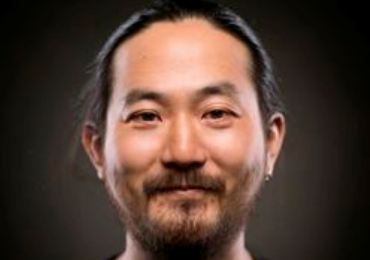
At the end of May, with photographer Simon Chang, while his stay in Nida was coming to an end, I talked about the specificity of Nida, time that always passes too fast, constant change, and photography as a way to slowly observe.
Maybe you can tell me about your experience in Nida? How are you feeling during your last days after your month-long residency here? How was your photographic and creative process?
I have mixed feelings now. I was in Nida two years ago for a photography symposium. I had a presentation and spent a week here. Back then it was my first time in Nida and I was totally amazed. This time, on paper everything seemed okay: a month in Nida, I thought life will go slowly and I will be able to take my time. To my surprise, time flies here and I’m going back to Vilnius in a few days. I think I’m going to have a huge shock – I feel like a plant now, like those trees. One hour here is like one second for people in the city.
I’ll just start with a joke. I’m a people photographer, I photograph people. Once you put a people photographer in Nida for the first time, it can feel like punishment. It’s hard to find people here. This is a joke of course. I had plenty of time here and I still tried to find people. For example, I met some seasonal workers. Overall, I started to work on a story about the backstage of Nida. Now everybody’s kind of preparing for the next high season here. I think it’s going to start this Sunday or Saturday with the “Hi, Neringa!” (Sveika, Neringa!) festival. Lots of tourists, rich people, all kinds of customers are going to rush to the island. And I’m leaving on Friday. This month, I managed to spend some intimate time with this very special place.
The project, which I’d been working on before I came, is about drag queens in Slovenia and mostly I documented their stories from the backstage. The moments when they are putting on makeup, joking with each other, being nervous or mad, before they step on stage. And after spending a couple of weeks here in Nida, I have a similar feeling. All of a sudden, I think to myself: isn’t this moment like Nida getting ready for the show? Then I started to pay attention to moments that evoke similar feelings.
I have this backstage feeling and it’s a blast to meet this beautiful actress before she goes on stage. Not everybody has this opportunity – usually people see Nida at its best during summer with a price included, the highest price. I saw Nida without makeup, and it was a more authentic encounter. It’s a bit, I wouldn’t say sad, but it’s a really mixed feeling. I talked to some guys, seasonal workers, in another village, Preila, and they said: “Oh, would you like to have a drink with us? As long as you don’t mind, we’re drinking vodka”. You sit in the household and there’s this drinking issue as well, maybe because your life can get kind of boring. Behind a beautiful facade, you’re starting to see the real stories.
I got myself a second-hand bike, as it was easier for me to move around and I didn’t want to stay only in Nida. I wanted to see other towns as well, which I did. On the way back from Pervalka, I saw this huge, abandoned factory surrounded by bushes. And then I went inside. I went there again for the second time yesterday and I took some souvenirs with me. In one of the abandoned rooms, I saw many things there. Someone even drew a map and marked some places, made some notes. I don’t know, maybe it’s for military use or he was observing something. He made notes on the wall. He was constantly observing something and in his schedule you can see some Russian and Lithuanian names. I told myself, it’s really interesting, another person before me was doing another residency (laughing). In that factory he was observing this sand pit, this region, and making some notes. And I saw something really identical – those were almost like my own notes.
Here, I wrote down names, places I was going to and all kinds of other information. And this guy who invited me to drink vodka, he drew me some symbols too, his notes were identical to the ones I found in the ruins of the old factory. I started to realise, even if I’m a documentary photographer, what if I started to mix in those found materials. Maybe I can achieve fiction. I’ve told myself that maybe for this project with Vilma (Samulionytė) and Gytis (Skudžinskas), for the booklet, I’m going to include materials I found in the old factory, all the handwriting. Again, it’s kind of a backstage story. I assume the tourists would never ever have any interest to come closer to such a story.
I want to combine my photographs with drawings or just notes of this person. If I can call him Jonas, it’s an easier thing to remember. I would like to do something with his observations. Because both of us were observing this island with different purposes, reasons and stories. We were both paying attention to what’s happening around us. That’s the thing I’ve been thinking for the past couple of weeks.
In the meantime, I’m still searching for an illustration for this Jonas’ diary. When I go through the images I made, I find lots of symbols in the factory. In the moment of taking pictures everything happens mostly subconsciously. Of course, I connect the photographs with what I’ve been thinking about, but I still just use my intuition. Once I started to put the photos on the wall, while getting ready for my open studio, I was kind of surprised by myself. Similar symbols started to repeat over and over again.
Then I encountered small wooden summerhouses, they’re beautiful and very simple. But on the other side, there are fancy villas. Personally, I’m not interested in photographing the fancy villas. I want to look for hidden evidence instead, to allow me to say before that evidence is buried by the sand. Like it happened before. As a photographer, I ask myself: am I photographing the process of something disappearing? Or am I photographing something that would stay? I’m not only photographing one specific moment anymore. I’m photographing a process and I’m making my predictions. It looks like I’m photographing life that is still, but actually it’s constantly moving. For example, I went to the cemetery, I was there two years ago, but now they blocked the opening, they put on huge wooden bars because it’s really dangerous inside. I was also photographing a lot of chairs by the bay, and then I went back again three days ago and those chairs had disappeared.
You described yourself as a people photographer, but you came to Nida at a time when there’s not that many people. You still managed to either find them or some kind of traces and remnants of their presence. It’s quite an interesting shift from photographing a bustling drag scene where even the backstage is very lively. How did you manage this shift?
I’m still searching for people and characters, especially at this time of the year. And it’s really easy to find those characters, as I’m always looking to get to know them. For example, seasonal workers are a community that people usually tend to ignore.
I also went to this place near the main beach. There’s this party place, but it looks like a ruin. I found out that there’s this artist living there named Edvardas. He had some installations in the yard. While I was walking around the house, I heard some sounds and saw people coming outside, so I went there to say hello. I asked him if I could look inside his studio. His son was there and he spoke English. So I went inside and in the studio were beautiful bigger pieces: portraits, landscapes, painted in an impressionist style. Then he told me he likes to listen to music very loudly and started to paint. He paints every day around eight, if the weather is nice, because the sea is behind his studio. Around eight o’clock and sunset, the light would go into the room and directly on the canvas. That’s light for him to paint. I saw it afterwards, though that day was a bit cloudy.
I went to visit him three times and once met some of his visitors. One of them was a Tatar guy from Ukraine, living in Vilnius. He took me to the beach in the evening, we were drinking beer and he was singing. Those characters I met thanks to this painter were very interesting to me.
I started practicing to do more landscapes. But I saw parts of nature as characters too. But in a way, it can seem a bit boring, because this beauty is overwhelming – it’s almost too sweet, like eating cakes every day. After three days, you’ve got it done. So I started to pay attention to those somewhat broken parts of this place. For me that’s a very consistent topic I’ve been working on as a photographer over the years. People with wounds, for example. I photograph mental patients; it’s a really long project of mine. Here I started to pay attention to broken trees – when everybody’s standing still and strong, all of a sudden the broken ones seem more special. The way they fell and broke leaves a story behind.
My routine here is really simple. I do my morning jogging, meditate in the forest. On one of the first days here, after my meditation I opened my eyes, looked at the trees and thought: “Oh, you guys are meditating here also. I’m not alone.” That’s why this residency to me is so special. It’s a really interesting learning curve for me too. I’m always looking out, searching for the stories to see: how does this person feel; what’s happening; what’s the situation? But here I have plenty of time for myself in the pure nature. I started to look inside and try to earn more association with this new environment. Usually it takes me lots of time to do that, but here I find a kind of nice balance. Of course, I still have the need to meet someone and talk to them, but I have plenty of time to think about the story between documentary and fiction too, the one I mentioned before.
Do you usually work with both documentary and fiction together or mostly with documentary and right now you’re just finding this aspect of fiction in your works?
Yes, I would say it’s kind of the first time. I mean, of course everything depends on the editing. Also the narrative, the message depends on what you want to say. Documentary, in a way, it’s fiction in itself. It depends on how you present it.
But this time, I just tend to make things a little bit more complicated. I’m not only writing with the light and presenting moments, I want to present a scenario, partially out of my imagination. For example, that guy who spent time in the room in the abandoned factory... what kind of image did he see when he was there? And when he made those plans, maps, routes, where did he go? Who did he meet? Maybe he also met some migrant workers and they were singing together at the seaside. It’s like adding another layer. The magic of Nida is a thousand of its layers. In the end, nothing is based on either truth or fiction. Everything is up for interpretation. Of course, as a viewer you can add your own layer. Or as another photographer too. And as we are talking about this, the wind might blow, the sand might disappear and go to another layer. That’s the nature of this place, it’s in constant change. And God knows, when I come back in September again, maybe some situations in my scenario will be gone or different.
How was your experience in Nida different from the time when you were here for just a week, around two years ago?
Very different. Back then was my first time ever here, I was just appreciating the beauty, I went to the sand dunes like everybody does. I didn’t have time to do a detour. But now I really feel like I have been living here. For example, I hate going to the town centre during the weekend. German tourists, even American ones, come from the ferry or the bus just to look around and appreciate the beauty. They take pictures of the dunes, go to the amber museum, all that. But I think my role here is not to consume beauty. It’s not my job at all. Rather I want to tell the unknown story. That’s the bar I set for myself for this project. I want to show you Nida through my eyes. And it’s the backstage of this place. And maybe one day the tourists might encounter those images and say: “What’s that?” I am thankful for this opportunity and the fact that I can have a very special relationship with this very special place.
It’s quite interesting how you are working right now with all the photos almost mapped out behind you on the wall. I don’t know if it’s your usual work process or you are just doing this before the studio visit. But in one interview, you mentioned trying to create a narrative from the puzzle pieces, so the mapped-out photographs correlate with this idea.
That’s a good point, I didn’t think about that. I remember that interview, I was editing this one photographic story about drag queens in Barcelona. And I put the photos on the walls then as well as here. Like this, you’re starting to see a bigger picture. In a way, I’m making my own puzzle about Nida. It’s not about one image or any specific image. Those pieces travel from one to another and I start seeing similar motifs in my pictures. Things are not that simple anymore. And what I saw in another town, at that factory, or in the landscape, in a way are all connected. I’m creating my own fairy tale; it’s not a documentary at all. It’s more like my imagination and what I managed to capture in one frame, almost like evidence of it. It’s not that important, if it’s really true about Nida or not, but that’s how I spent my time here. I’m also looking forward to the studio visit event tomorrow. I’m curious about the feedback from other people. And not to mention that I haven’t spoken to people properly for a few days (laughing).
That’s quite a nice approach to this specific place, it shifts through seasons very visibly. During winter, or just off-season, it can feel almost secluded, even though of course there are some locals here throughout the year, but still not that many people. Now it’s an interesting time of shifting towards it almost being overfilled.
I came from Slovenia, I’ve been living there for quite some time, there’s beautiful nature there too. But in Nida, in most of the places I went to, I was alone. I think nowadays, that feeling is so precious – you can start to really enjoy solitude. But also this place has a character. I want to ask it: “How do you feel now and in the middle of July? I feel sorry for you. I’m happy that I met you now.” I’m not saying that the tourists come only to abuse the place. But somehow this place gives you totally different feelings. For example, just before this interview, I went to the forest. And it felt like the sea today is even louder. I could feel it. Today it’s louder and I don’t know why. Then I started to write in my diary, that maybe it knows that this weekend the season is opening. It is reacting to this fact. I feel like I made a new friend, and this time it’s this place.
You mentioned writing. Do you write only for diaristic purposes or are you also planning to include those writings in your project and its presentation in September?
At the moment, I haven’t thought about it too much. Maybe I will use them, maybe I won’t. But for me it’s an important process. I’m meditating and then I’m walking in nature. Here in Nida I constantly have a dialogue going on. But I’m not able to remember everything. If I’m not photographing, then I am writing in my journal. Just like the pictures, those writings are evidence of something. So I have different channels.
My previous book about Kurdistan consists of two books in one: one is my journal, only the text; and the other one is the photo book. That’s what I tend to do for quite some time. I’m a storyteller, not only a photographer, and there are so many things and so many feelings I want to express. And sometimes it feels easier to use photography, sometimes writing.
You described yourself as a storyteller, and when I was looking at your previous projects I saw many very, very different subjects. Now you are photographing Nida and the backstage of it; before you were capturing the drag scene of Ljubljana; you also went to Kurdistan to take pictures of mental patients and so on. How do you choose the subjects? How do you find those stories?
I was studying in Prague, but I am from Taiwan and now living in Europe. I’m a migrant myself. Even though I now have a family, two daughters, and am settling down in Slovenia, I won’t ever look like a typical European person anyway. So for me, it’s really easy to relate to more marginalised people.
In Prague, my first long-term story focused on homeless people. I would see them next to my faculty or while I was travelling. I was a student back then, so it was easier for me to travel by night bus. And whenever I arrived in a new city in Europe, the first person I’d meet in the city was homeless. I can just relate to people living on the corners. In Nida too, I didn’t go to the restaurants here, but I went to lots of ruins.
Usually people are afraid of going to places like that or talking to people different from them. But once you know their names, things totally change. I think that’s my privilege, I’m a photographer and I’m looking for stories and characters. Somehow they just open different doors. You can be standing in front of a total stranger but feel this empathy. You not only feel how different we are, but also how similar.
In my case, thanks to photography, I’m constantly wandering, I try to stay open. Sometimes it’s not me who’s trying very hard to meet the stories, but those stories come to me. Usually that’s my approach. I don’t want to be too pushy. I have to make sure the person is feeling comfortable and trusts me enough, so we can work together.
Since you’re taking pictures of people, do you usually try to foster friendships or connections with them before including them in your projects? Maybe here, in Nida, it’s harder – it’s such a short period of time. But what happens usually?
Usually all my projects aren’t finished. Now I remember, that’s exactly what the painter Edvardas told me. I was pointing to this huge portrait and he said “no, it’s not finished”. And he repeated the same thing about every painting I pointed to.
I would say I choose my projects. There’s no editor behind me. “Hey, go there, and bring the story after three or four days, or a week.” You know, this special kind of photographer from magazines like National Geographic. And don’t get me wrong, they’re professional, but they come with assignments. I’m longing for stories. So I never view them only as someone in my image, I want to get to know them as a new friend. Every time you can feel that there’s something new about this person and what they feel. It’s more of a mutual connection.
Nowadays, we talk a lot about AI or AI-generated images. I think there’s something impossible to replace, something very raw, very genuine. It’s a human relationship, that’s what I enjoy the most. It’s not about a photograph at all, but rather about what happens between you and another person. And that’s why I have to make sure the person feels comfortable, I always photograph out of respect. The priority will always be the person, and anything else comes second.
You mentioned AI and this fast stream of images. It’s a very beautiful gesture to use photography as a tool for fostering connections with your surroundings, other people, and for observing slowly.
Here I also brought my Hasselblad film camera, and I think Nida is perfect for this. Usually if I photograph people, it’s handheld, I never use tripods. But here for landscapes I can just put the camera on a tripod and maybe take one or two photographs a day. Then I walk around in the forest, look at the scene, for the second, third, fourth, even for the fifth time. Nowadays it’s totally a luxury, and hopefully this intimacy with the image is visible in the photo as well. I take my time, then I take a second look and observe again, while having different feelings. Because the surroundings are so special, it slows you down and you start to pay attention to the things you didn’t see before.
I think after one week here, there was a concert at the Thomas Mann Museum. I went there with another artist-in-residency. I was kind of shocked, because it was totally packed, I was sitting in almost the last row. I could only see all the audience from behind, mostly old ladies. And after spending one week here, I started to pay attention to the little things I didn’t pay too much attention to when I was in the city. For example, the texture of the hair and muscles on the neck, even a fly on the window. Once you expose yourself to pure nature like this, you pick up those missing abilities, and become more sensitive in a way. It’s a really nice feeling, not only as a photographer but as a person too.


